
Meeting Them Where They Are: One Family's Path to Oral Care Success (Part 1 of 3)

From Oral Aversion to Trust: Building Tolerance Before the Toothbrush
Meeting Them Where They Are follows one family’s path through pediatric oral care, from early sensory aversion to confident independence, and what their experience teaches clinical teams about caring for children with sensory sensitivities. Each issue stands on its own and builds toward the next.
In this issue: We meet the patient at his most guarded and trace the early years of tolerance-building, graded exposure, applied behavior analysis, and the first happy visits, which made everything that followed possible.
Some patients arrive at the dental chair already convinced that the mouth is a place of threat. One teenager we will follow across this series began exactly there. Born at 25 weeks as one of twins, he spent three and a half months in the NICU, where early intubation and a feeding tube were lifesaving and also left a lasting mark. He developed a deep aversion to anything approaching his face or mouth, well before his autism diagnosis at age three and a half. In his mother’s words, he would not take a bottle, would not tolerate a toothbrush, and would not let anyone near his face.
For a clinical team, this is a familiar and humbling starting point, and it is also where the most important work happens. The arc that follows is, in effect, a long course of graded exposure, even though the family never used that term.
The family began far below the threshold of resistance. Vibration toys came first, offering controlled, predictable sensory input that the child could anticipate. A washcloth at the lips followed. Over roughly 12 years of applied behavior analysis, therapists worked deliberately on desensitization, drinking from a straw, and tolerating objects in the mouth. Each step was small, repeatable, and built on the one before it. Progress was measured in months rather than minutes.
The dental home contributed something distinct through what the family called the happy visit. A happy visit is an appointment with no agenda beyond presence and positivity. The child walks in, sits down, and perhaps the clinician looks in the mouth or touches a tooth with a mirror. Perhaps nothing at all. The aim is familiarity rather than treatment. These visits began when the boy was four years old and could not yet walk through the office door without crying.
What made them work was structure. The family broke each appointment into named steps and explained them in advance: walk inside, sit in the waiting room, go back, sit in the chair. Sitting in the chair was itself a goal worked over many visits, with a little more added each time. Provider continuity reinforced the overall effort, because seeing the same faces helped the child become comfortable with his surroundings.
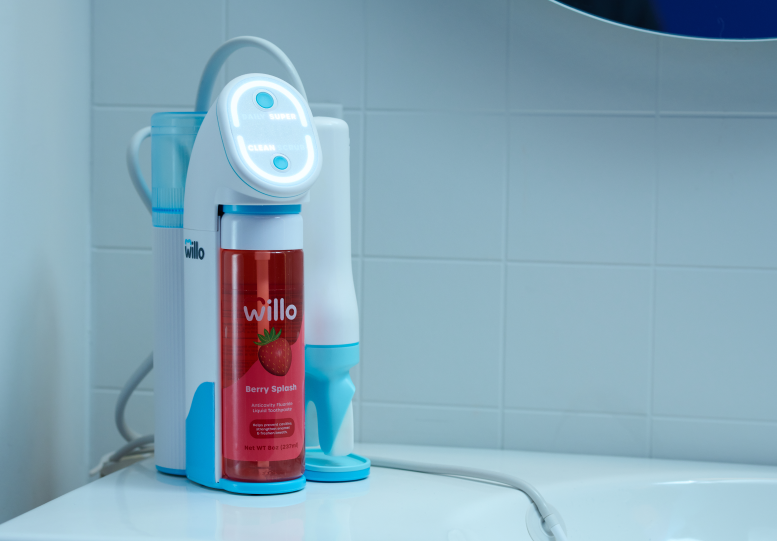
None of this produced a dramatic moment. It produced a foundation. By the time he was a teenager, the groundwork was solid enough that a single new tool could change everything. That tool, and the breakthrough it made possible, is where the next issue begins.
Clinical takeaways• Start well below the threshold of resistance and add one new sensation at a time. • Protect the happy visit from treatment pressure. Its value lies in the absence of demand. • Make the sequence explicit. Naming each step-in advance gives an anxious patient a map and a sense of control. • Keep patients with sensory sensitivities paired with consistent providers wherever scheduling allows. |
“The more you do it, the more they become comfortable.” A caregiver on the cumulative power of the happy visit.


