
Do Kids Need Special Toothbrushes When They Have Braces?

THE DENTAL INSIGHT
The day your child walks out of the orthodontist’s office with a brand-new set of braces, you usually leave with more than just a shifting smile. You also walk out with a heavy goodie bag filled with specialized dental gear: tiny interdental brushes, orthodontic floss threaders, specialized wax, and a manual brush.
Looking at all these gadgets, it’s completely natural for parents to wonder: Does my kid need a special toothbrush for braces, or is a regular toothbrush enough?
The honest clinical answer is a bit of a paradox. Strictly speaking, a child can clean their braces with a regular toothbrush. However, doing so requires a level of physical dexterity, patience, and technical precision that very few children consistently have. Let’s break down why traditional brushes struggle, what makes a brush "ortho-friendly," and how automation is shifting the conversation.
The Problem With Regular Toothbrushes
Regular toothbrushes, whether manual or standard electric, feature flat, uniform bristle fields. They are designed to glide smoothly across the flat, natural surfaces of bare teeth.
The problem is not awareness. It is execution. The moment you add square metal brackets and stiff archwires, those flat bristles hit a literal wall. Instead of wrapping around the teeth, the bristles press against the front of the metal hardware.
The critical areas, like the tight spaces right under the wire and the narrow margins along the gumline, can remain untouched unless the brush is tilted at precise angles. Because regular brushing around braces is highly technique-dependent, it can leave behind sticky bacterial plaque that contributes to cavities and swollen gums.
The Clinical Dilemma:
“Giving a child a special manual toothbrush helps, but it still relies on their willingness to scrub at precise 45-degree angles for two full minutes. True consistency only happens when you reduce the manual technique required.”
What Makes a Toothbrush Ortho-Specific?
To solve this flat-bristle dilemma, specialized orthodontic brushes usually rely on a few distinct modifications:
- V-Trim Channel Bristles: These brushes feature longer outer bristles than inner bristles, creating a "V" shape down the middle. This channel allows the brush to straddle the metal brackets while the longer outer bristles sweep the enamel above and below the hardware.
- Ultra-Soft Tapered Tips: Standard medium- or stiff-bristled brushes can bend or catch on orthodontic ties, causing discomfort or potentially loosening a bracket. Special brushes feature soft, resilient tips that sweep around metal contours with less friction.
- A Compact, Maneuverable Head: Extra metal hardware reduces the available space inside a child’s mouth. A smaller brush head can help reach the back molars where anchor bands may be placed.
| Brushing Option | Bristle Mechanics | Parent Confidence |
|---|---|---|
| Standard Toothbrush | Flat bristle surface can make it harder to clean beneath archwires. | Low. Requires strong manual dexterity. |
| Special Ortho Manual | V-trim cut helps fit over brackets, but still requires careful hand angles. | Moderate. Better tool, same room for human error. |
| Willo Automatic Toothbrush | Ortho-specific brush head helps reach around brackets and wires without requiring manual technique. | High. Fully automatic, technique-free brushing experience. |
Why the Smartest Special Brush Is an Automatic One
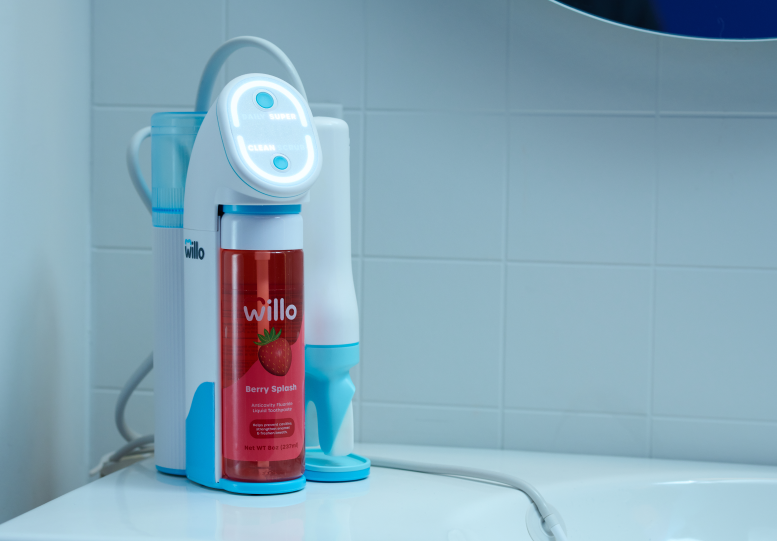
Instead of handing your child a slightly modified manual brush and hoping they develop the patience to clean every corner of their hardware, you can upgrade to a system that helps automate the routine. This is where Willo changes the orthodontic hygiene conversation.
Willo is a fully automatic toothbrush designed to make effective brushing easier during orthodontic treatment. Paired with the Willo Ortho Brush Head, specially configured bristles help clean around brackets and wires while reaching along the gumline where plaque commonly accumulates. With the press of a button, Willo's automated brushing cycle performs the brushing motions for your child, helping reduce technique-related mistakes and support a more consistent clean day after day.
The goal is not perfect manual brushing technique. The goal is helping kids clean effectively around their hardware without the friction, every single day.
So, do kids need a special toothbrush for braces? Yes. Braces create unique brushing challenges, and using a tool designed to clean around brackets and wires can make a meaningful difference. But instead of simply handing that challenge to your child, an automatic brushing system like Willo helps reduce the technique required for an effective brush. The result is a more consistent clean, greater confidence for parents, and fewer daily arguments about whether brushing was done well enough.
Give your child the ultimate orthodontic brushing companion.


