
From Daily Struggles to Consistent Brushing

For autistic children, predictability is everything. The resistance you see in the chair often comes from the same sources as resistance at home: unpredictable sensations, inconsistent pressure, tasks that require motor planning and sequencing the child hasn't mastered, and novelty that triggers anxiety rather than curiosity.
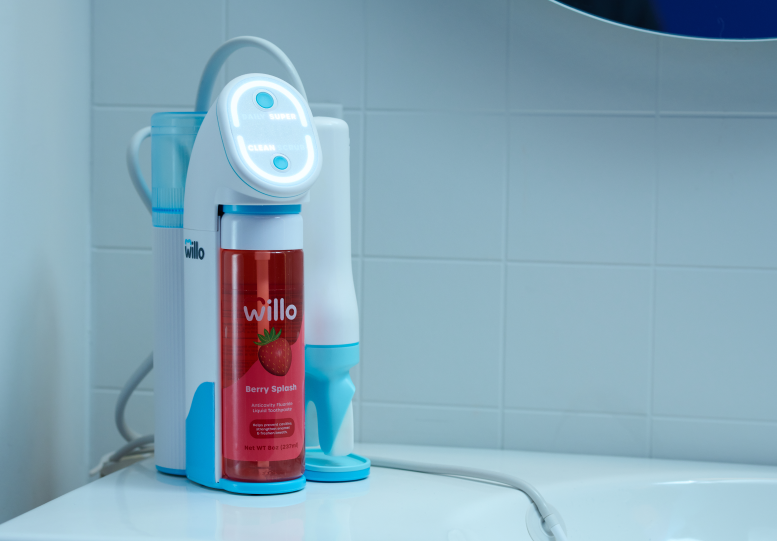
The Willo AutoFlo+ addresses this directly, and it's worth understanding why the "system" framing matters to this population. It is a fully automated, technique-free oral care system that dispenses toothpaste, positions itself using the OptiClean U-shaped brush head, brushes with a gentle mechanical motion, and rinses, all without the child having to guide the brushing motion. Traditional vibrating toothbrushes can feel overwhelming or irritating for many children with sensory sensitivities, and Willo's mechanical brushing motion feels calmer, more predictable, and easier for kids to tolerate.₁ For a child who struggles with motor planning or who experiences sensory overload, the difference is fundamental: same pressure, same duration, same sensation, every single time. That consistency is what produces desensitization over repeated use, not a one-time novelty experience.
Nothing like this currently exists in the market. And when dental professionals describe it as a system that dispenses, brushes gently, and rinses consistently, that framing consistently resonates with both caregivers and therapists.
In a BCBA-led clinical trial with neurodiverse young adults ages 13-25, Willo demonstrated measurable improvements in brushing consistency, reduced oral sensitivity over time, and increased caregiver satisfaction. 85% of neurodivergent participants needed only 1-2 verbal prompts in the first week. The device extends it into the home, where outcomes are made or lost.
Introducing Willo in Practice: Tips for Dental Professionals
During OHI: Demonstrate the lip rest placement on a model. Narrate simply and calmly, keep the demonstration unhurried. For sensory-sensitive patients, reducing the speed and intensity of the introduction matters more than the information you cover.
For hesitant families: Suggest a two-week desensitization trial in which the child simply holds and explores the device without turning it on. Desensitization programs are among the effective interventions identified for improving dental care experiences in children with ASD.₁ The goal is to remove novelty before you introduce function.
At checkout: Send caregivers home with Willo patient education materials, QR code, and a one-page handout, so the device doesn't arrive as a surprise during the bathroom routine. Reducing novelty reduces anxiety. (Link to Ambassador Patient Education Kit contents).
The handoff matters as much as the device: A pilot study using a multi-strategy caregiver training approach, combining behavioral contracts, didactic and observational learning, environmental adaptations, and ongoing coaching from a dental hygienist, achieved approximately a 50% reduction in plaque scores among individuals with developmental delays.₂ What that tells us is that Willo extends your clinical influence, but only if the introduction is deliberate and the caregiver leaves knowing exactly what to do next.
REFERENCES
1. Al-Beltagi, M., Al Zahrani, A. A., Mani, B. S., Hantash, E. M., Saeed, N. K., Bediwy, A. S., & Elbeltagi, R. (2025). Challenges and solutions in managing dental problems in children with autism. World Journal of Clinical Pediatrics, 14(3), 106778.
2. Binkley, C. J., Johnson, K. W., Abadi, M., Thompson, K., Shamblen, S. R., Young, L., & Zaksek, B. (2014). Improving the oral health of residents with intellectual and developmental disabilities: an oral health strategy and pilot study. Evaluation and Program Planning, 47, 54-63.
__________________________________________________________
About the Authors
 Rachel Miller, RDH
Editor in Chief
Rachel lives in Grand Haven, Michigan, with her family. She is a clinical affairs strategist and dental innovation leader who has spent her 30-year dental career translating complex science into meaningful impact for clinicians, patients, and the companies bold enough to reimagine the standard of care.
A published author in both peer-reviewed and professional outlets, she specializes in KOL ecosystem development, clinical validation, and bridging what science supports with what the market needs to hear. She brings the same conviction and standards to every page of this newsletter.
 Kaci Roberts, MBA, RDH
Director of Content & Events
She specializes in content creation, event planning, dental network growth, and strategic brand development across multiple industries. Her experience includes leading ambassador programs, coordinating national events, and building marketing initiatives that strengthen community engagement and elevate brand visibility.


