
When Prevention Breaks Down: What’s Actually Happening at Home

Common brushing breakdown patterns, shame-reducing scripts, and tools that support consistency
Most pediatric oral health prevention happens in one place: at home, at the end of the day, when everyone is tired.

When brushing isn’t consistent, it’s often framed as a motivation issue or “lack of follow-through.” But in many households, the barrier isn’t awareness or effort — it’s that the routine is simply too hard to execute reliably.
Below are common brushing breakdown patterns we see, along with language and strategies that help families build routines that actually stick.
Common brushing breakdown patterns
1. The nightly negotiation
Brushing turns into reminders, resistance, and eventually a power struggle. Over time, kids start to associate brushing with stress — and parents start to dread it.
2. Sensory “nope” moments
Some kids aren’t being defiant — brushing just feels like too much. Toothpaste texture, foam, vibration, sound, or even the bathroom environment can trigger overwhelm.
3. Starts strong, doesn’t finish
Many children can begin brushing, but can’t sustain it. They lose track of steps, get distracted, stop early, or rush through — especially at the end of the day when executive function is already depleted.
4. The slow fade
Families start with great intentions, then consistency drops over time. Not because they don’t care — but because the routine takes too much energy to maintain night after night.
5. The independence gap
A child can brush, but the parent doesn’t trust the quality. Parents step in to “help,” kids disengage, and brushing becomes something done to them instead of with them.
These patterns usually aren't about willpower. They are signs the routine is asking too much.
Scripts that reduce parent shame (and improve follow-through)
Parents often feel embarrassed admitting brushing is hard. Shame doesn’t create better routines — it creates avoidance. When families feel judged, they’re less likely to ask for help or follow through on recommendations.
Here are a few simple scripts that validate the challenge while keeping the focus on solutions:
Normalize the struggle
“This is really common. Brushing is one of the hardest routines for families to maintain consistently.”
Reframe it as routine design
“If brushing is difficult, it doesn’t mean anyone is failing — it usually means the routine needs adjustment.”
Remove the moral framing
“This isn’t about willpower. It’s about building a system that works on tired nights.”
Focus on consistency first
“Let’s aim for consistency first. We can refine technique once the routine is stable.”
Acknowledge sensory/executive function factors
“For some kids, brushing is genuinely hard because of sensory input or executive function demands — that’s more common than people realize.”
These small reframes reduce defensiveness and increase the likelihood that families will keep trying.

Tools + strategies that support consistency at home
Brushing routines improve fastest when families stop trying to “push through” and start making the routine easier to repeat.
Here are strategies that consistently help:
1. Reduce the number of steps
Every extra step increases failure risk. The goal is to make brushing feel like one simple action — not a multi-step process.
2. Build predictability
Same time, same order, same language. Predictability lowers resistance and reduces decision fatigue.
3. Use fewer words
When brushing gets hard, parents often respond by talking more — which can escalate tension. A simple, consistent phrase tends to work better:
“It’s brushing time.”
“First brush, then bed.”
“We brush, then we’re done.”
4. Shift from persuasion to structure
The best routines don’t rely on convincing. They rely on cues, repetition, and systems that make the “next step” obvious.
5. Reward consistency, not perfection
Reinforce showing up and completing the routine, rather than perfect technique. Consistency is what creates long-term prevention.
6. Support independence wherever possible
When kids can brush independently, routines become more sustainable. Independence reduces power struggles and helps prevent parent burnout.
7. Design for the hardest nights
A routine isn’t truly strong if it only works on calm, well-rested evenings. It has to survive real life: travel, illness, overstimulation, late nights, and caregiver fatigue.

How Willo® fits into routine-based prevention
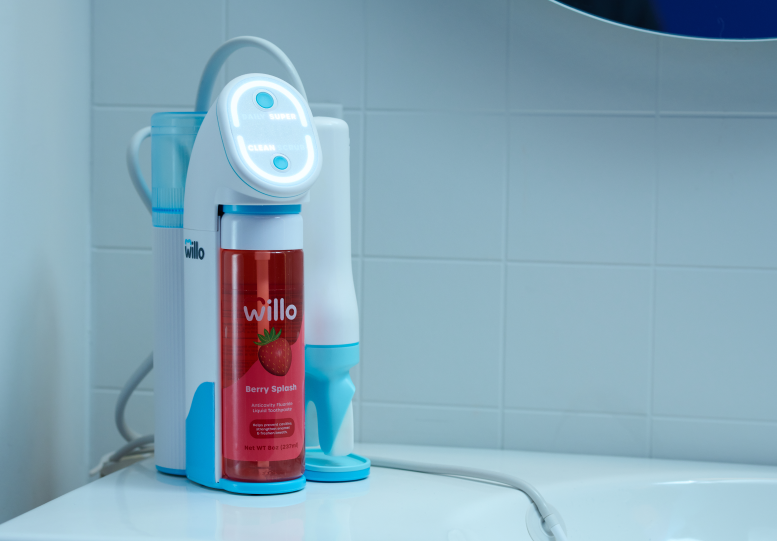
Willo® was built around a simple idea: prevention only works when routines are repeatable.
By automating brushing motion and timing, Willo® helps:
- Children complete brushing more independently
- Parents step out of the nightly negotiation loop
-
Routines hold up on tired or overstimulated nights
For families struggling with consistency — especially when sensory or executive function demands are high — Willo® can be one part of a more realistic prevention plan.

It doesn’t replace clinical care.
It supports what happens at home, every night.
The takeaway
Prevention doesn’t fail because families don’t care.
It fails when routines are too hard to repeat.
When dental professionals help families build routines that account for real-world sensory, cognitive, and emotional demands, outcomes improve — not just during Children’s Dental Health Month, but year-round.
Want to learn more?
If you’d like to learn more about Willo® or explore ways to share it with families in your practice,
👉 Click here to connect with our team


