
A Dental Hygienist’s Perspective: What Parents Should Know About “Auto Brushing” Toothbrushes
Expert Perspective
Rachel Miller, RDH
Rachel Miller has over 25 years of clinical experience as a Registered Dental Hygienist and more than 5 years training and consulting across dental education, patient outcomes, and product innovation. Her expertise bridges the gap between scientific performance and what actually works for patients in real life.
Key Takeaways
- Most “auto brushing” toothbrushes are not fully automatic in real-life use.
- Effective plaque removal depends on bristle contact, especially along the gumline.
- Silicone bristles generally do not clean like angled nylon bristles.
- Most kids are still developing brushing skills, which leads to inconsistent results.
- Willo is designed to reduce reliance on technique and help deliver a more consistent clean.
Hi, I’m Rachel Miller, a registered dental hygienist.
I work with families every day on brushing routines, and one thing I consistently see is how confusing the current toothbrush landscape can be for parents.
If you’ve ever felt unsure about what actually works, you’re not alone.
Most toothbrushes are not designed around how kids actually brush.
Quick answer: Are “auto brushing” toothbrushes really automatic?
There is a common misconception that “auto brushing” toothbrushes clean teeth on their own.
In practice, most still require movement or positioning to clean effectively.
Without consistent contact between bristles and teeth, important areas like the gumline and between teeth can be missed.
The biggest misconception I see
“I thought my child could just put it in their mouth and it would do everything.”
This expectation makes sense based on how these products are presented.
But in reality, most still depend on the child to move or position the brush correctly.
When that doesn’t happen, plaque is often left behind.
Why bristles matter
Many lower-cost or mouthpiece-style brushes use silicone bristles.
They can feel soft, but from a clinical perspective, they do not remove plaque as effectively as nylon bristles.
In dentistry, angled nylon bristles are used because they maintain contact with teeth and reach along the gumline.
That contact is what removes plaque.
What actually determines a good clean
- Consistent bristle contact with teeth
- Coverage along the gumline
- Sufficient brushing time
- Minimal reliance on user technique
Most kids are still developing the ability to meet these requirements consistently.
Why this matters for parents
Many parents assume that regular brushing means their child’s teeth are being cleaned effectively.
This creates a gap between brushing as a routine and brushing as an effective clean.
A different approach
This gap is where many brushing solutions fall short.
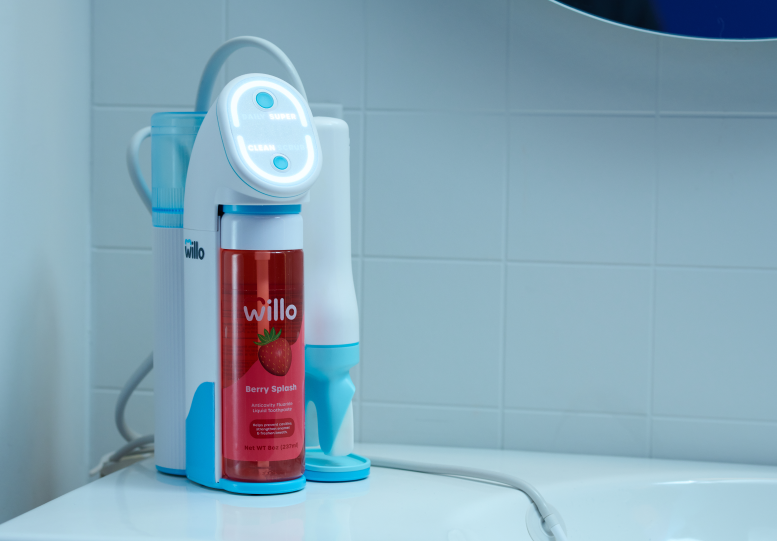
Willo was designed to reduce reliance on technique and deliver a consistent clean.
It uses angled nylon bristles and handles the brushing motion itself.
From a hygienist’s perspective, consistency is one of the most important factors in maintaining oral health over time.
Learn more about the clinical approach behind Willo here.
Why I recommend Willo
When I recommend something to families, I focus on what works in real life.
Willo is designed around how kids actually brush, not how they are expected to brush.
It combines properly angled nylon bristles with automated brushing motion.
This reduces how much the outcome depends on the child’s technique.
For parents, it removes a lot of the guesswork around whether brushing is being done effectively.
That’s why I feel confident recommending it.
Explore how Willo works here.
Final thoughts
Many toothbrushes are designed to make brushing easier.
But easier does not always mean more effective.
The goal is not just to complete brushing. It is to ensure teeth are consistently and thoroughly cleaned.
FAQ
Are “auto brushing” toothbrushes fully automatic?
No. Most require movement or positioning to clean effectively.
Are silicone bristles effective?
They are generally less effective than properly angled nylon bristles.
Can kids brush effectively on their own?
Most kids are still developing that ability, which leads to inconsistent results.
What matters most when choosing a kids toothbrush?
Consistency of cleaning, not just features.


