
Back-to-School Oral Health: Reset Kids’ Brushing Habits

Turning one seasonal appointment into a year of prevention
Turning one seasonal appointment into a year of prevention
Every August, dental schedules fill with families fitting preventive visits around physicals, sports forms, and the first day of school. Inside that familiar rhythm is an underestimated opportunity for pediatric preventive dental care: the back-to-school routine reset.
Children arrive at precisely the moment when their households are rebuilding bedtimes, mornings, meals, and expectations. Oral hygiene can become part of that reset. Habits that may be difficult to change in the middle of the school year are, for a few weeks, genuinely open to being rebuilt.
Summer routines can become oral health risks
Many families do not return with a brushing routine that simply needs polishing. They return with one that has quietly eroded over an unstructured summer.
When children brush inconsistently—or brush for only 30 to 60 seconds instead of the recommended two minutes—plaque remains undisturbed, gingival inflammation can develop, and the risk of demineralization increases. A parent may sincerely report that their child “brushes every day,” while the clinical picture tells us that frequency alone is not producing effective plaque removal.
That makes the back-to-school dental visit an opportunity not only to evaluate oral health, but to help families rebuild the daily home oral hygiene routine that supports it.
Start with caries risk assessment
Caries risk assessment helps dental professionals identify disease risk before it becomes damage, understand why a particular child may be vulnerable, and focus preventive care on the families who stand to gain the most.
When a child is identified as being at high or extreme caries risk, the home routine becomes especially important. Fluoride varnish, dental sealants, and professional prophylaxis are valuable preventive interventions, but they can only be part of the answer if ineffective daily brushing remains a primary source of risk.
Why effective brushing can be difficult for children
When pediatric home care falls short, the problem is not necessarily motivation or compliance.
Effective toothbrushing requires a child to position bristles correctly along the gumline, maintain appropriate pressure, reach posterior and other hard-to-see surfaces, and sustain attention for a full two minutes. Those tasks depend on fine motor skills and executive function that are still developing in young children.
Recognizing those developmental limitations changes the question from "Why won't this child brush better?" to "How can we make effective brushing easier for this child to accomplish?"
How automated brushing can support pediatric home care
This is where automation can change the equation.
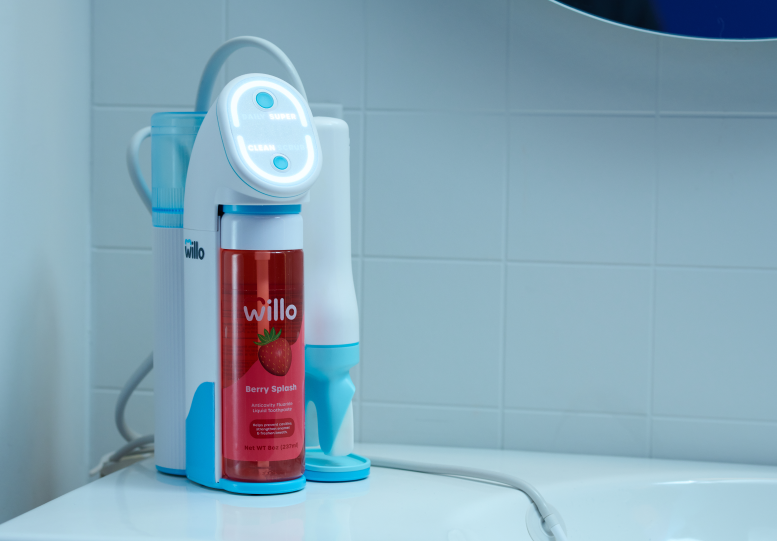
Willo is designed to help manage four variables children may struggle to control consistently during toothbrushing: bristle positioning around the full arch, continuous motion across tooth surfaces, a consistent 2-min brushing duration at 1-min per arch, and precise toothpaste delivery.
In a study of 60 pediatric subjects, Willo supported the removal of up to 7x more plaque in the hard-to-reach interproximal and posterior areas, and children using Willo brushed for the full 2min 87% of the time.
For the right pediatric patient, reducing the number of variables the child has to manage independently can help make effective brushing more consistent and predictable.
Turn the back-to-school visit into a home-care reset
Importantly, reinforcing home oral hygiene does not have to add significant time to the appointment. It can fit naturally into conversations the dental team is already having:
- Notice signs of an inconsistent home routine during intake and examination.
- Connect plaque patterns and caries risk with what may be happening at home.
- Identify developmental or behavioral barriers that make conventional brushing difficult.
- During oral hygiene instruction, demonstrate tools or techniques that could make effective brushing easier.
- Give families a simple way to continue learning about appropriate home-care solutions after the visit.
The goal is not simply to get a child through today's prophylaxis. It is to use the back-to-school dental appointment as a reset for the months that follow.
When brushing stops being a nightly battle and becomes something a child can complete independently in two predictable minutes, everything downstream can change. The dental team can then return to what it does best: monitoring risk, refining technique, reinforcing progress, and protecting the healthy habits already taking hold.
Here is to a school year of healthier habits, healthier airways, and healthier smiles.


