
Auto Brushing Toothbrushes for Kids: What to Know | Willo

If you're searching for an auto brushing toothbrush for kids, chances are you're looking for something that makes brushing easier and less dependent on your child's technique.
But there's an important distinction that's easy to miss:
Not every toothbrush that looks automatic actually automates the brushing motion.
Some toothbrushes use a U-shaped mouthpiece that surrounds the teeth and uses powered vibration or movement, but still requires the child to move or manipulate the brush as directed.
Willo works differently.
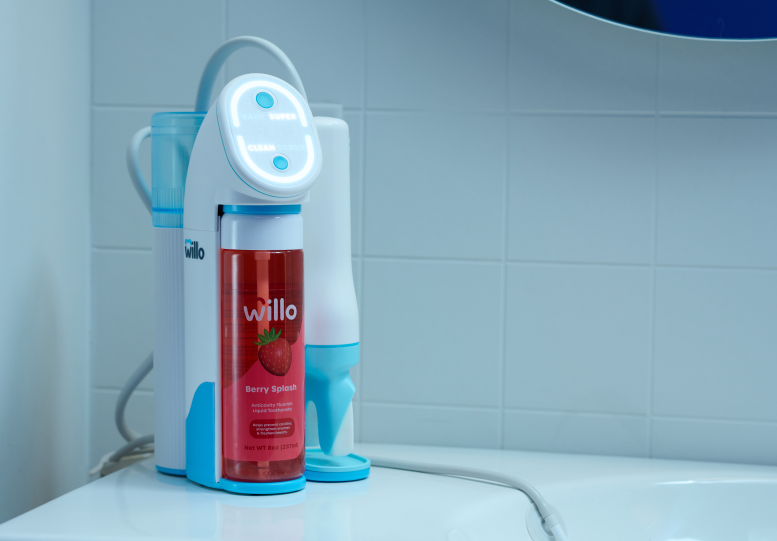
Willo powers the brushing motion itself. Instead of relying on your child to create the movements needed to brush their teeth, Willo automatically powers the movement of thousands of soft bristles across the teeth.
Understanding what a toothbrush actually automates can help you choose the right option for your child.
What Is an Auto Brushing Toothbrush?
An auto brushing toothbrush is designed to automate more of the physical brushing process so the clean depends less on the user's ability to perform the right brushing movements.
Traditional brushing requires a surprising amount of technique. A child needs to position the toothbrush correctly, move it across different tooth surfaces, maintain appropriate pressure, reach harder-to-access areas, and continue for the recommended brushing time.
Different toothbrushes automate different parts of that process.
That's why the word "automatic" alone doesn't tell you everything you need to know.
A better question is: What part of the brushing does the toothbrush actually automate?
Are U-Shaped Toothbrushes Automatic?
U-shaped toothbrushes can automate parts of brushing, but depending on the design, they may still require the user to create some of the brushing movement.
These toothbrushes typically place bristles around multiple teeth at once and use powered vibration or movement. Because the mouthpiece surrounds the teeth, the experience can look fully automatic.
But having bristles around the teeth isn't necessarily the same as automatically creating the brushing motion.
Some U-shaped toothbrushes still instruct users to move, rock, or manipulate the mouthpiece during use. That means the device may power the bristles while the user still plays a role in creating the brushing motion.
For parents looking for an auto brushing toothbrush because their child struggles with brushing technique, that's an important distinction.
Does an Auto Brushing Toothbrush Still Need to Be Moved?
It depends on how the toothbrush is designed.
Some powered and U-shaped toothbrushes still require the user to move the device during brushing. Other automatic brushing systems automate more of the motion itself.
That's why it's worth looking beyond words like "automatic" or "auto" and understanding what your child will actually need to do during a brushing session.
The simplest question to ask is:
Does my child have to create the brushing motion, or does the toothbrush power that motion?
Automatic Bristles vs. Automatic Brushing: What's the Difference?
The distinction comes down to what the toothbrush is actually doing.
Powered bristles
Powered bristles means the device creates movement or vibration in the bristles, but the user may still need to move or position the toothbrush to create the full brushing action.
Automatic brushing
Automatic brushing goes further by powering the brushing motion that would otherwise need to be performed by the person brushing.
Both can reduce effort compared with a manual toothbrush. But they don't necessarily require the same amount of technique from the child.
If your goal is to find a toothbrush that makes brushing less dependent on your child's movements and technique, understanding what is actually automated matters.
How Is Willo Different From a U-Shaped Toothbrush?
Willo powers the brushing motion instead of relying on the child to create it.
With Willo, the child doesn't need to move a traditional toothbrush from tooth to tooth or recreate the small, precise movements required for effective manual brushing.
Willo's flexible brush head contains thousands of soft bristles, and the system powers their brushing motion across the teeth.
That distinction matters for kids because brushing well requires a lot at once: positioning, angle, pressure, coverage, movement, and time.
Willo was designed to reduce how much the clean depends on a child getting all of those things right.
And the difference isn't just about convenience. Willo is clinically proven to remove up to 7x more plaque than a manual toothbrush in hard-to-reach areas.
Are Auto Brushing Toothbrushes Good for Kids?
An auto brushing toothbrush can be a good option for kids when it makes effective brushing less dependent on skills they're still developing.
But "automatic" alone isn't enough to determine whether a toothbrush is right for your child.
Parents should consider:
- How much brushing motion the child still has to perform
- How the bristles contact the teeth
- How much the clean depends on brushing technique
- Whether the toothbrush supports a complete two-minute routine
- How easy it is for a child to use consistently
- Whether its cleaning performance has been clinically evaluated
The goal isn't simply to find the toothbrush that does the most things automatically. It's to find one that helps your child get a thorough, consistent clean.
What Should You Look for in an Auto Brushing Toothbrush?
When comparing auto brushing toothbrushes for kids, start by looking at what is actually being automated.
- Does my child still need to move the toothbrush during brushing?
- Does the device power the bristles, the brushing motion, or both?
- How does the brush maintain contact with the teeth?
- How much does the clean depend on my child's technique?
- Does it support the recommended brushing time?
- Has its cleaning performance been clinically evaluated?
- Is it designed for kids?
Those answers tell you much more about how a toothbrush works than the word "automatic" on its own.
The Bottom Line: Look at What the Toothbrush Actually Automates
There are more options than ever for parents looking for an auto brushing toothbrush for kids.
Some surround the teeth. Some vibrate. Some still require the child to create part of the brushing motion.
Willo takes a different approach.
Willo powers the brushing motion itself, so a thorough clean depends less on your child's ability to get the movements right.
Because the important question isn't whether a toothbrush sounds automatic.
It's what your child still has to do once it's in their mouth.
Auto Brushing Toothbrush FAQs
What is an auto brushing toothbrush?
An auto brushing toothbrush automates more of the physical brushing process so the clean depends less on the user performing the correct brushing movements. Different toothbrushes automate different parts of brushing, so it's important to understand what the device actually does.
Do auto brushing toothbrushes still need to be moved?
Some do. Certain powered and U-shaped toothbrushes still require the user to move or manipulate the brush during use. Other systems, including Willo, power the brushing motion itself.
Are U-shaped toothbrushes fully automatic?
Not necessarily. Some U-shaped toothbrushes use powered vibration or movement but still require the user to move, rock, or manipulate the mouthpiece during brushing. The exact instructions vary by product.
How is Willo different from a U-shaped toothbrush?
Willo powers the brushing motion rather than relying on the child to create it. Its flexible brush head uses thousands of soft bristles and powered motion to make the clean less dependent on traditional brushing technique.
Are auto brushing toothbrushes good for kids?
An auto brushing toothbrush can be helpful for kids when it reduces how much effective brushing depends on developing dexterity, consistency, and brushing technique. Parents should also consider clinical performance, ease of use, brushing time, and how much movement the child still needs to perform.


