
How a Dental Hygienist Uses Toothbrushing to Support Oral-Motor Skills and Brushing Independence

By Joy Lantz, Dental Hygienist and Myofunctional Therapist
For children who struggle with gagging, oral sensitivity, or other oral-motor challenges, toothbrushing can be about more than getting teeth clean. A predictable brushing routine may also give children opportunities to practice skills such as lip seal, jaw stability, oral tolerance, and nasal breathing.
As a dental hygienist for almost thirty years, I have always been a little particular about toothbrushes. I need to know: Is it actually cleaning? Are the difficult areas getting reached? Is the patient able to use it effectively? Most importantly, what happens when I put disclosing solution in the mouth and look at what the toothbrush is accomplishing?
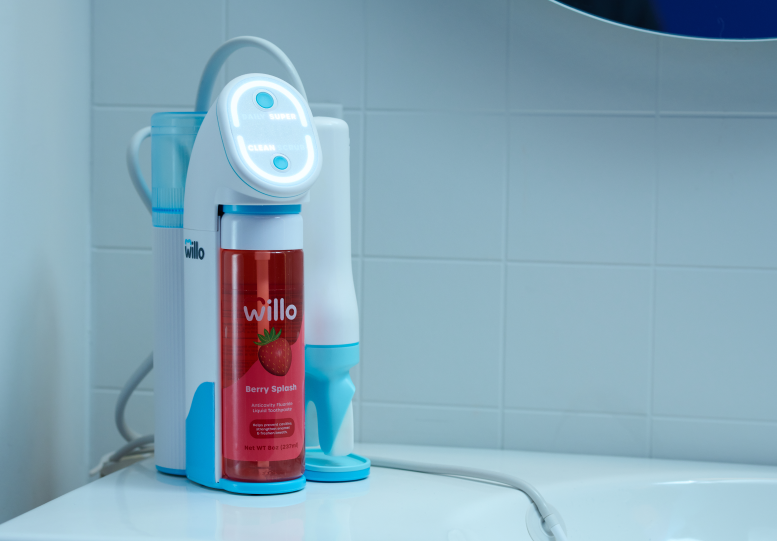
That is one of the reasons Willo caught my attention. I appreciate Willo from the perspective of someone who has spent years looking at teeth, plaque, brushing habits, and oral hygiene.
But as someone who also works with myofunctional patients, I have come to appreciate it for another reason entirely: Willo can help children with their brushing routine while also giving them opportunities to practice important oral-motor skills.
What do I look for beyond clean teeth?
When I evaluate a child, I am looking at much more than whether their teeth are clean.
I am watching how they use their lips. How they stabilize their jaw. Whether they can maintain lip seal. How they tolerate something inside their mouth. How they respond to sensory input. And, of course, how they breathe.
That is why I find Willo particularly helpful for some of my myofunctional patients. The child may think they are simply brushing their teeth. I see something else happening.
When they use the brush, they must maintain it in their mouth. They have an opportunity to practice lip seal around the toothbrush and jaw stability while holding their mouth in position. Because they are using the brush in their mouth, they also have an opportunity to practice nasal breathing during the brushing routine.
They aren't sitting down thinking, “Today I am going to work on my lip seal and nasal breathing.”
They're thinking, “I'm brushing my teeth.”
Why can independence and control matter during brushing?
For many kids, brushing is something adults constantly remind them to do:
“Did you brush?”
“Go brush your teeth.”
“Let me check.”
“Did you get the back?”
That can quickly turn brushing into another area where a child feels like they are being corrected.
One of the things I like most about Willo is the experience it creates for the child. The child gets to participate in the process. The app gives them something engaging to follow, and they can work within their own comfort level while building the skill.
That sense of control can be especially valuable for children who struggle with sensory experiences, gagging, or simply having someone tell them what to do. I have seen this matter for my own patients.
How can children with a strong gag reflex build brushing tolerance?
Some of my patients have significant gagging responses. For those children, simply putting a toothbrush into their mouth can feel like a huge task.
Expecting them to immediately tolerate two minutes of brushing can be unrealistic.
Instead of making the first goal “brush perfectly for two minutes,” we can start with tolerating the experience. Maybe the first goal is 30 seconds. Then 60 seconds. Then a little longer.
Willo provides a predictable brushing routine while allowing us to respect where a child is starting. That gradual progression can help support patient comfort.
I saw this firsthand with one of my six-year-old patients.
One six-year-old's journey from limited oral tolerance
When this little guy first came to me, he had been a chronic mouth breather since birth. He was also a gagger and had difficulty tolerating things in his mouth.
One of the seemingly simple skills we had to teach him was how to blow his nose. That may sound insignificant, but for him, it was an important piece of learning how to manage nasal breathing and oral sensations.
He was also recommended for an expander, which meant we had another challenge: How were we going to help him manage something new in his mouth?
We recommended that his family try Willo.
At first, he could tolerate the brush for only about 45 seconds. He wasn't perfect, but that wasn't the point. We followed his lead.
He used the app, worked within his own comfort level, and gradually increased the amount of time he could tolerate the brush. Little by little, something changed. His skills became stronger.
Eventually, he was able to tolerate his expanders. Today, he can use his football mouthguard with no issues.
For this child, the Willo toothbrush became one small piece of a much bigger journey.
For this child, the goal wasn't perfect two-minute brushing on day one. It was building comfort and tolerance over time.
What might a child be practicing while brushing?
This is probably the biggest reason I recommend Willo to some of my patients.
They aren't thinking about therapy. They are brushing their teeth. But while they're doing it, they may also have opportunities to practice skills that we are working toward in myofunctional therapy.
That can include:
- Tolerating something in the mouth
- Developing greater jaw stability
- Maintaining lip seal around the brush
- Keeping the brush in place with the lips
- Practicing nasal breathing during the activity
- Building confidence and independence with an oral-care routine
Of course, I don't consider a toothbrush a replacement for myofunctional therapy. But when a tool can support the goals we are already working on while helping a child become more independent and successful with oral hygiene, that is a win.
Clean teeth and opportunities to build skills
As a dental hygienist, I want my patients to have clean teeth. As a myofunctional therapist, I want to help them develop better oral function. And as someone who works with children, I want them to feel successful instead of constantly feeling like they are failing at something adults tell them they should be able to do.
That is why Willo has become a tool I appreciate recommending.
Willo is designed to guide children through a consistent brushing routine and help them brush more independently.
But for some of my patients, I also see something happening underneath that routine. They are building tolerance. They are gaining confidence. And they may be working on myofunctional goals without even realizing it.

The best therapy is the therapy a child doesn't realize they are doing.
— Joy Lantz, RDH
Key takeaways for dental professionals
For children with oral sensitivity, gagging, or oral-motor challenges, progress may begin with tolerance rather than perfect brushing duration. A predictable brushing routine can give some children opportunities to practice oral tolerance, lip seal, jaw stability, nasal breathing, and independence while completing an everyday oral-hygiene task.
Willo is not a replacement for myofunctional therapy. Joy's experience illustrates how an oral-care routine can complement goals already being addressed by a child's care team.


